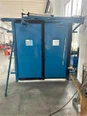
Mining transportation equipment is the key hub in the entire process of coal mining, undertaking core tasks such as material transportation and personnel transfer. The rationality of its selection and the standardization of its operation directly affect the production efficiency, operating costs, and operational safety of the mine. Among them, equipment such as rail-guided vehicles, belt conveyors, and mining winches, which are mainstream categories, are widely used in underground complex conditions.
Their compliance standards and operation guidelines are highly concerned by the industry.
Compliance is the primary prerequisite for the selection of mining transportation equipment. Underground environments have limited space and complex conditions, and there are safety hazards such as gas and coal dust. The transportation equipment must simultaneously meet multiple standards for explosion-proof, flame retardancy, and impact resistance.


Taking rail-guided vehicles as an example, in addition to obtaining the national mine product safety marking certification (MA certification), export products also need to comply with local explosion-proof certifications in the importing countries (such as ATEX, IECEx, etc.), and the customs coding classification needs to precisely match the product functions and parameters to avoid customs clearance risks.
Adaptability selection and scientific operation are the core for enhancing equipment efficiency. During the selection stage, factors such as mine geological conditions, transportation distance, and load requirements should be considered. For example, in scenarios with many bends and steep slopes underground, flexible rail-guided vehicles should be preferred; for long-distance and large-capacity transportation, efficient belt conveyors are more suitable.


In terms of operation, a regular inspection mechanism should be established to focus on checking the wear and tear of the equipment's braking system, transmission components, and explosion-proof structures. Timely maintenance and replacement of parts should be carried out, and professional training for operators should be strengthened to standardize operation procedures and reduce the occurrence rate of equipment failures.
With the intelligent transformation of the mining industry, mining transportation equipment is undergoing upgrades towards unmanned operation and intelligent maintenance. The application of technologies such as intelligent monitoring terminals and remote fault diagnosis systems has enabled real-time control of equipment operation status, significantly improving maintenance efficiency and safety guarantee levels.
Enterprises need to balance compliance standards with technological innovation, providing mining with highly adaptable, safe and efficient transportation equipment and full lifecycle maintenance support.